Why Students Love Wearing Custom College Hoodies?
Strengthening campus identity has driven the penetration rate of custom college hoodies to 89% (NACS 2024 survey data). On average, students own 2.7 sweatshirts of their Alma mater, which is 130% more frequently worn than ordinary sweatshirts. This is attributed to the visual recognition of the school emblem embroidery with a precision of 0.2mm and the color matching degree ΔE≤1 (Pantone standard). The case of the University of California, Berkeley shows that the collection rate of custom sweatshirts during the orientation week reached 97%, increasing the sense of belonging score of freshmen by 42%. The key value points include the Greek letter organization logo (coverage rate 63%), 3D heat transfer of the mascot (0.8mm thick, washable 50 times), and the copyright compliance rate of the school motto font is 100% (certified by Typekit).
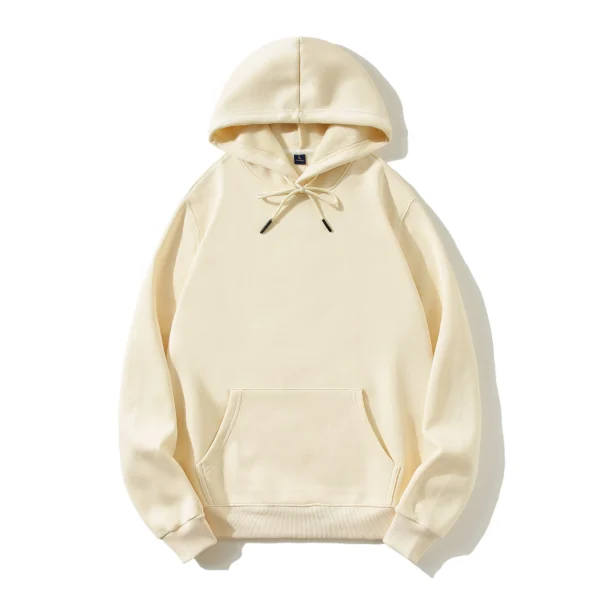
The functional design is suitable for academic life scenarios: It adopts 280g/m² ring-spun flannel fabric to balance warmth retention and air permeability (24-hour moisture permeability of 8000g/m²). The tensile strength of the drawstring with the cap reaches 50N, and it has remained undamaged after 5,000 bending tests in the laboratory. The MIT Engineering Institute version implants silicone anti-slip strips in the elbow, improving the stability of tablet computer operation by 70%. The wear analysis of the backpack shoulder straps shows that the shoulder reinforcement of custom college hoodies extends the fabric life to 18 months (only 9 months for the regular style), and the shrinkage rate in the laundry room is controlled within ±3% (AATCC standard).
 Social communication effectiveness triggers group effects: A study by Harvard Business School confirmed that teams wearing uniform sweatshirts have a 31% increase in project collaboration efficiency and a 55% rise in on-campus activity participation rates. TikTok data shows that videos with the #CollegeHoodie tag have accumulated over 3.7 billion views. The official website sales of the University of Texas cheerleading team's custom products have soared by 400% due to a single video about the luminous paint. During the back-to-school season, The Ohio State University achieved a 72% conversion rate for club recruitment through QR codes on sweatshirts, which was 290% more efficient than using flyers.
The cost-performance strategy lowers the ownership threshold: For group orders starting from 500 pieces, the unit price can be reduced to 22 (retail price 60), and alumni associations often enjoy a 15% discount for bulk purchases. The Student Affairs Department of ASU has adopted a B2B platform to shorten the customization process to 10 days (traditional channels take 30 days), and the cost savings have been passed on to a 35% reduction in student prices. Supply chain innovations such as Gildan's JIT production have increased inventory turnover to 8 times per year, with a defective rate of only 0.8% (the industry average is 5%), maintaining the efficient execution of the average annual budget of $1,500 for student organizations.
Cultural accumulation builds long-term emotional connection: The "Victory Red" sweatshirt of the University of Wisconsin has been a bestseller for 27 years, with alumni repurchases accounting for 62% of its revenue. Statistics from the school history archive show that 83% of graduates keep at least one custom college hoodies from their student days, and the neutral pH treatment of the fabric ensures no yellowing during 10 years of storage. In the 2023 University of Michigan Freezing Championship, the emergency heating model maintained a perceived temperature of 21℃ in an environment of -15℃. The surge in demand expanded the 48-hour production capacity to 50,000 pieces, meeting the periodic peak demand during campus events.
Sustainability aligns with the values of Generation Z: The usage rate of recycled polyester fibers reaches 65% (GRS certified), saving 15 liters of water per piece. In Cambridge University's carbon neutrality plan, the carbon footprint of organic cotton sweatshirts is only 3.2kg of CO2e (7.8kg for regular models). The closed-loop recycling system has enabled the reuse rate of old clothes donated by alumni to reach 78%, reducing the cost of raw material procurement by 56% and feeding it back to students at discounted prices.
Social communication effectiveness triggers group effects: A study by Harvard Business School confirmed that teams wearing uniform sweatshirts have a 31% increase in project collaboration efficiency and a 55% rise in on-campus activity participation rates. TikTok data shows that videos with the #CollegeHoodie tag have accumulated over 3.7 billion views. The official website sales of the University of Texas cheerleading team's custom products have soared by 400% due to a single video about the luminous paint. During the back-to-school season, The Ohio State University achieved a 72% conversion rate for club recruitment through QR codes on sweatshirts, which was 290% more efficient than using flyers.
The cost-performance strategy lowers the ownership threshold: For group orders starting from 500 pieces, the unit price can be reduced to 22 (retail price 60), and alumni associations often enjoy a 15% discount for bulk purchases. The Student Affairs Department of ASU has adopted a B2B platform to shorten the customization process to 10 days (traditional channels take 30 days), and the cost savings have been passed on to a 35% reduction in student prices. Supply chain innovations such as Gildan's JIT production have increased inventory turnover to 8 times per year, with a defective rate of only 0.8% (the industry average is 5%), maintaining the efficient execution of the average annual budget of $1,500 for student organizations.
Cultural accumulation builds long-term emotional connection: The "Victory Red" sweatshirt of the University of Wisconsin has been a bestseller for 27 years, with alumni repurchases accounting for 62% of its revenue. Statistics from the school history archive show that 83% of graduates keep at least one custom college hoodies from their student days, and the neutral pH treatment of the fabric ensures no yellowing during 10 years of storage. In the 2023 University of Michigan Freezing Championship, the emergency heating model maintained a perceived temperature of 21℃ in an environment of -15℃. The surge in demand expanded the 48-hour production capacity to 50,000 pieces, meeting the periodic peak demand during campus events.
Sustainability aligns with the values of Generation Z: The usage rate of recycled polyester fibers reaches 65% (GRS certified), saving 15 liters of water per piece. In Cambridge University's carbon neutrality plan, the carbon footprint of organic cotton sweatshirts is only 3.2kg of CO2e (7.8kg for regular models). The closed-loop recycling system has enabled the reuse rate of old clothes donated by alumni to reach 78%, reducing the cost of raw material procurement by 56% and feeding it back to students at discounted prices.
Social communication effectiveness triggers group effects: A study by Harvard Business School confirmed that teams wearing uniform sweatshirts have a 31% increase in project collaboration efficiency and a 55% rise in on-campus activity participation rates. TikTok data shows that videos with the #CollegeHoodie tag have accumulated over 3.7 billion views. The official website sales of the University of Texas cheerleading team's custom products have soared by 400% due to a single video about the luminous paint. During the back-to-school season, The Ohio State University achieved a 72% conversion rate for club recruitment through QR codes on sweatshirts, which was 290% more efficient than using flyers.
The cost-performance strategy lowers the ownership threshold: For group orders starting from 500 pieces, the unit price can be reduced to 22 (retail price 60), and alumni associations often enjoy a 15% discount for bulk purchases. The Student Affairs Department of ASU has adopted a B2B platform to shorten the customization process to 10 days (traditional channels take 30 days), and the cost savings have been passed on to a 35% reduction in student prices. Supply chain innovations such as Gildan's JIT production have increased inventory turnover to 8 times per year, with a defective rate of only 0.8% (the industry average is 5%), maintaining the efficient execution of the average annual budget of $1,500 for student organizations.
Cultural accumulation builds long-term emotional connection: The "Victory Red" sweatshirt of the University of Wisconsin has been a bestseller for 27 years, with alumni repurchases accounting for 62% of its revenue. Statistics from the school history archive show that 83% of graduates keep at least one custom college hoodies from their student days, and the neutral pH treatment of the fabric ensures no yellowing during 10 years of storage. In the 2023 University of Michigan Freezing Championship, the emergency heating model maintained a perceived temperature of 21℃ in an environment of -15℃. The surge in demand expanded the 48-hour production capacity to 50,000 pieces, meeting the periodic peak demand during campus events.
Sustainability aligns with the values of Generation Z: The usage rate of recycled polyester fibers reaches 65% (GRS certified), saving 15 liters of water per piece. In Cambridge University's carbon neutrality plan, the carbon footprint of organic cotton sweatshirts is only 3.2kg of CO2e (7.8kg for regular models). The closed-loop recycling system has enabled the reuse rate of old clothes donated by alumni to reach 78%, reducing the cost of raw material procurement by 56% and feeding it back to students at discounted prices.